
By Florenda Corpuz
TOKYO – Japanese humanitarians, doctors and international volunteers whose work has helped communities across Asia gathered in Tokyo on Oct. 7 for an event marking the 70th anniversary of the normalization of diplomatic relations between the Philippines and Japan.
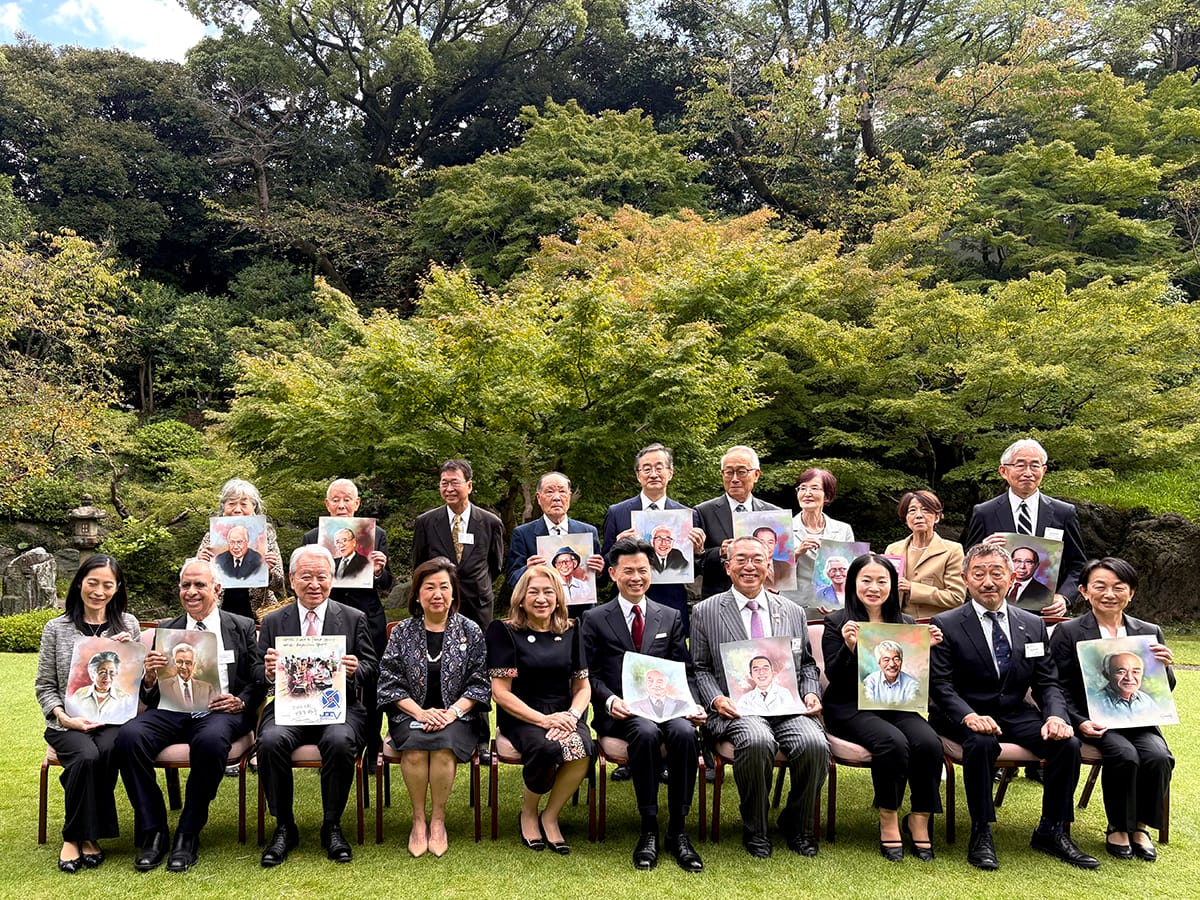
The “Magsaysay Laureate Legacy Exchange in Japan,” held at the International House of Japan, brought together Ramon Magsaysay Award laureates, their families and representatives of organizations to discuss how their work can continue and reach younger generations.
The event was part of the Philippine Embassy’s celebration of seven decades of friendship between the two countries, whose ties have grown through exchanges in education, culture, development and community service.
Philippine Ambassador to Japan Mylene Garcia-Albano highlighted the importance of sustaining that relationship as the two countries look toward the future.
“We felt that they deserved greater attention here, especially as we mark the 70th anniversary of the normalization of Philippines-Japan diplomatic relations,” Garcia-Albano said. She added that the laureates’ contributions show “how individuals and organizations in Japan have served communities across Asia.”
Susanna Afan, president of the Ramon Magsaysay Award Foundation, said Japan was an important setting for the gathering because of its influence in education, culture and youth engagement across Asia. She said the foundation wanted to preserve the laureates’ stories and connect people working toward similar goals.
“We bring them together, we try and interconnect like-minded people with the same advocacies, so that they can think and imagine ways by which they can collaborate, so they can come up with new, more relevant ideas, projects, so we can create more impact in Asia together,” Afan told Filipino-Japanese Journal.
Often described as Asia’s Nobel Prize, the Ramon Magsaysay Award has recognized 359 individuals and organizations for their contributions to public service and communities across Asia, including 28 recipients from Japan.
Among those who spoke at the gathering was ophthalmologist Tadashi Hattori, a 2022 laureate who has provided free eye treatment and surgery to people in Vietnam who cannot afford care. Hattori has also trained local doctors and said he was thinking about how his work could continue after he steps away.
“I am thinking about how I could pass my work on to the next generation,” he said.
Kenichi Kubota, who represented the Japan Overseas Cooperation Volunteers when the organization received the award in 2016, spoke about volunteers who continue serving communities after their overseas assignments. Some have gone on to work with the United Nations and other development organizations.
The gathering also highlighted the continuing work of the late Japanese doctor Tetsu Nakamura in Afghanistan. Yuichi Hara, president of Peshawar-kai, said the organization continues medical care and community development projects linked to Nakamura, including efforts to treat leprosy and improve access to water.
Afan said the foundation hopes the laureates’ experiences will encourage more people, particularly younger generations, to learn from one another and work together across borders.
The Tokyo event included an exhibition on Japanese Magsaysay Award recipients and discussions on continuing their work.