
By Florenda Corpuz
TOKYO – The Philippines marked the 128th anniversary of its independence in Tokyo on June 9, alongside the 70th anniversary of the normalization of diplomatic relations with Japan, as officials expressed condolences for a recent powerful earthquake in Mindanao and reaffirmed steadily deepening bilateral ties.
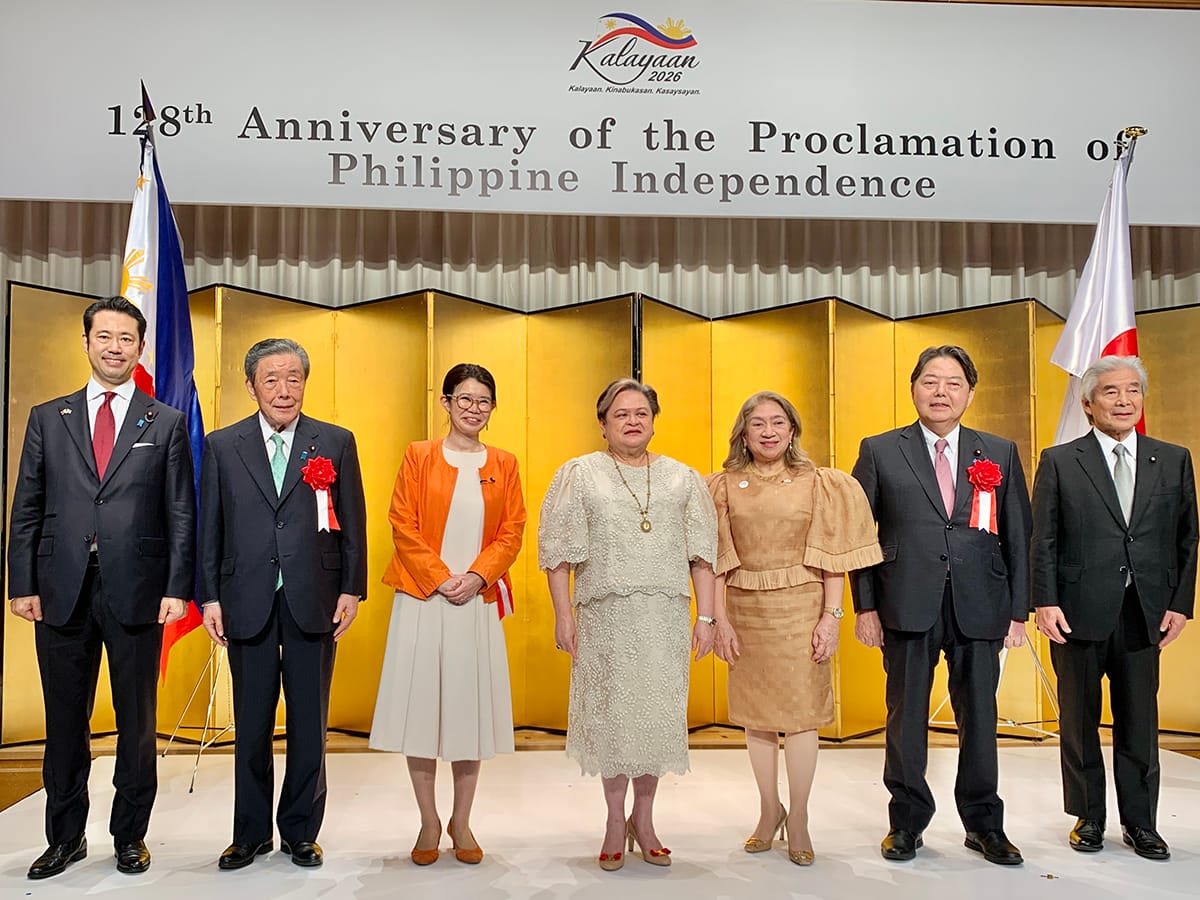
The Philippine Embassy hosted a reception at the Imperial Hotel, attended by Foreign Affairs Secretary Ma. Theresa Lazaro, State Minister for Foreign Affairs Ayano Kunimitsu, Minister for Internal Affairs and Communications Yoshimasa Hayashi, and Hiroshi Moriyama, chairman of the Japan-Philippines Parliamentary Friendship League, along with members of the diplomatic corps.
In her remarks, Kunimitsu described the year as historic for Japan-Philippines relations, citing the state visit of President Ferdinand Marcos Jr. and First Lady Liza Araneta-Marcos to Japan in late May. She said the visit included Imperial ceremonies, summit talks, and an address to the Japanese Diet, underscoring what she described as the close relationship between the two countries.
Kunimitsu said both sides agreed during the summit to elevate bilateral relations to a comprehensive strategic partnership, aimed at strengthening cooperation in a sustained and multilayered manner despite changes in the international environment.
Hayashi conveyed condolences to those affected by the magnitude 7.8 earthquake that struck off Maasim, Sarangani on June 8, which left 47 people dead as of Thursday, extending sympathy on behalf of the Japanese government and people.
He also said Japan places strong importance on cooperation with Southeast Asia, particularly the Philippines, which he described as a key pillar of regional stability and economic order.
Hayashi highlighted expanding cooperation in information and communications technology, including submarine cables, 5G infrastructure, and artificial intelligence initiatives such as joint efforts to develop AI models that reflect local languages and cultures.
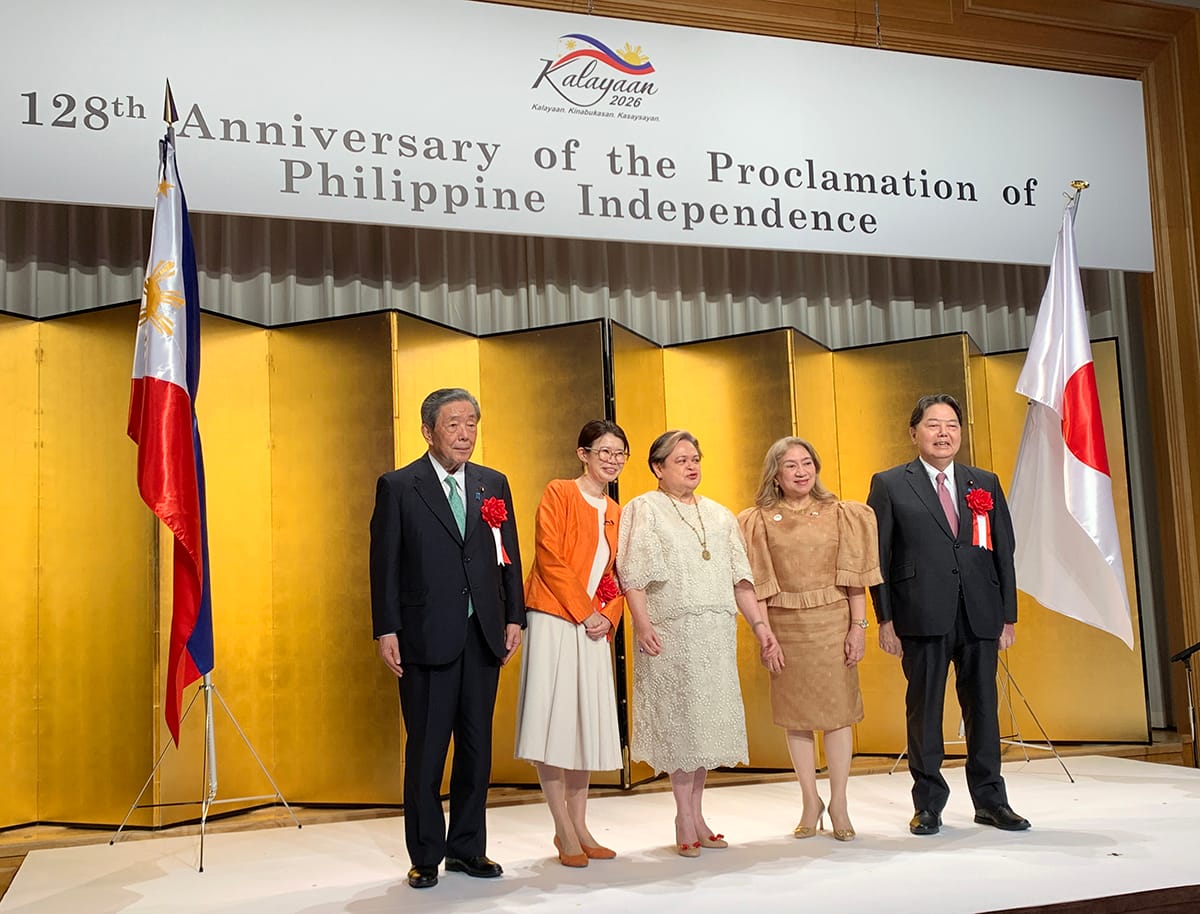
L-R: JPPFL Chair Hiroshi Morayama, State Minister for Foreign Affairs Ayano Kunimitsu, Secretary of Foreign Affairs Ma. Theresa Lazaro, Philippine Ambassador to Japan Mylene Garcia-Albano and Minister for Internal Affairs and Communications Yoshimasa Hayashi
Lazaro anchored her remarks in shared history, recalling postwar reconciliation efforts that led to the normalization of diplomatic relations in 1956.
She cited former President Elpidio Quirino’s decision in the early 1950s to pursue reconciliation with Japan as a defining moment in bilateral relations, calling it an exercise in “strategic foresight and sovereign wisdom.”
Lazaro said the Philippines and Japan have since built an “equal and deeply substantial partnership,” grounded in trust and expanding cooperation across political, economic, and security fields.
She also thanked Japan for its swift expressions of solidarity following the earthquake in Mindanao, saying such gestures reflect the strength of bilateral ties.
“True independence is not isolation,” Lazaro said, adding that sovereignty is defined by the ability to choose partnerships that advance peace and prosperity.
Kunimitsu also noted the 70th anniversary of the normalization of diplomatic relations, with commemorative events held under the theme “Weaving the Future Together: Peace, Prosperity, and Possibilities.”
Philippine Ambassador to Japan Mylene Garcia-Albano said the relationship has entered what leaders have described as a “platinum era,” marked by expanding cooperation across political, economic, and security fields.
She said the Embassy’s commemoration was held in a more intimate format this year, reflecting global challenges, while emphasizing that friendship, cooperation, and mutual support remain central to the relationship.
The envoy also highlighted Japan’s continued support for ASEAN centrality and regional cooperation in the Indo-Pacific.
The event concluded with a toast to the continued strengthening of Philippines-Japan relations.