
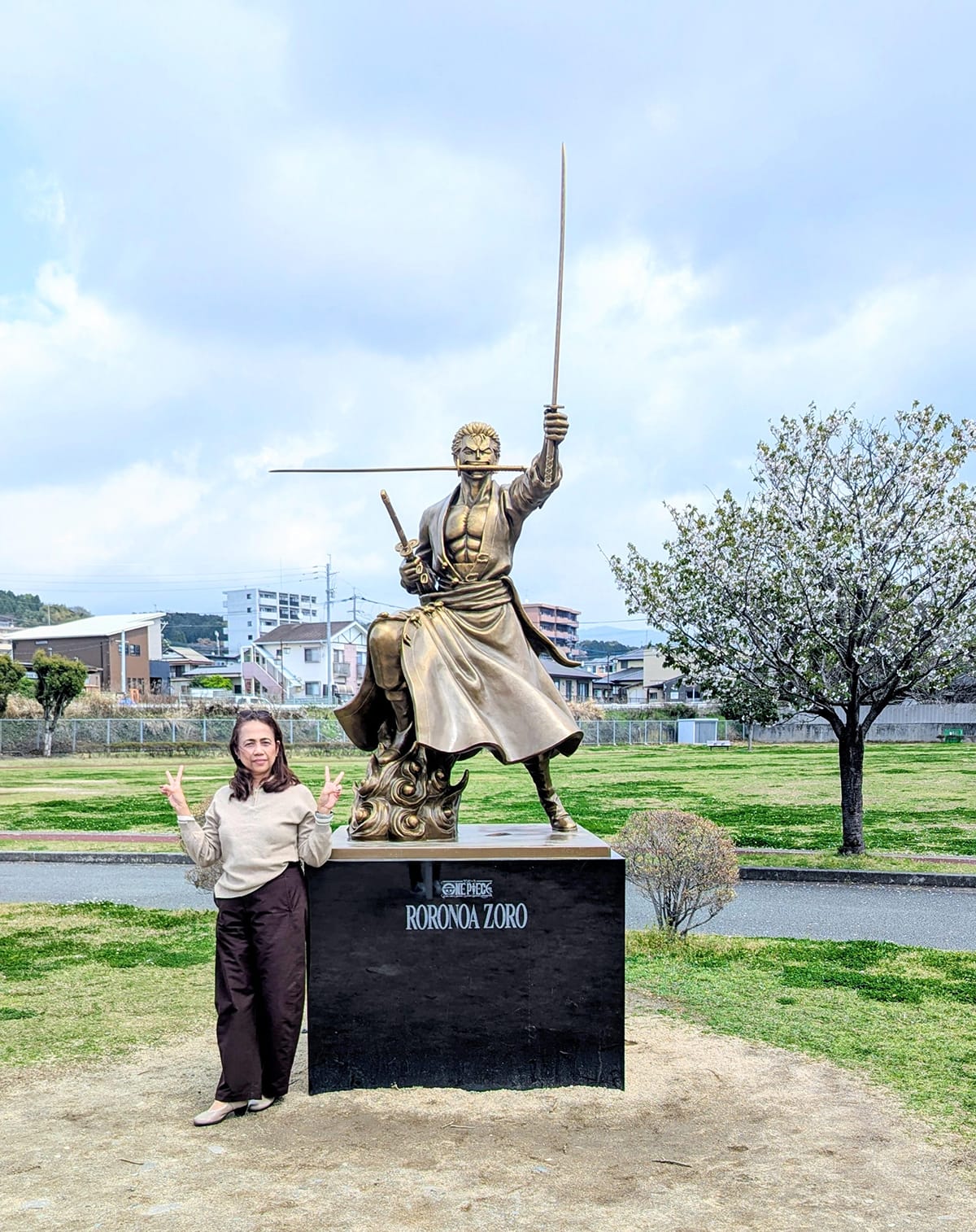
By Florenda Corpuz
KUMAMOTO/TOKYO – A Filipina English teacher in Kumamoto found herself reliving the fear of a major earthquake a decade after surviving the prefecture’s devastating 2016 tremors.
Adele Matsuda was inside a kindergarten classroom in Kumamoto City on July 28 when the magnitude 7.1 earthquake struck.
She was teaching three kindergarten pupils when the building began shaking.
“It was like there was wind, but there was no wind,” Matsuda told Filipino-Japanese Journal. “You could really see the building shaking.”
The earthquake happened around 4:27 p.m., just minutes before her class was scheduled to end. The children had already picked up their bags when the shaking started.
Matsuda said she immediately guided the children toward the wall for safety.
“We were on one side, pressed against the wall. The children held on to my arms,” she said.
The children, she added, remained calm because they regularly participate in earthquake drills at school.
“They did not panic. They were quiet while waiting for the shaking to stop,” she said.
The shaking brought back memories of the 2016 Kumamoto earthquakes, which Matsuda described as stronger than the latest quake.
“The first night in 2016 was very strong. I still cannot forget the sound from underground,” she said, recalling the deep rumbling she heard after the initial quake.
Matsuda has lived in Kumamoto for 38 years. She first came to Japan as an entertainer before marrying a Japanese man, raising three children and building a life in the prefecture.
She now teaches English at a YMCA program, where she has worked for 20 years, and at a local kindergarten where she has taught for five years.
Matsuda also serves as a point of contact for many Filipinos during emergencies.
After the earthquake, she began checking on members of the Filipino community, especially those in badly affected areas such as Yatsushiro City and Uki City.
A Filipina resident’s house in Yatsushiro City, one of the hardest-hit areas in Kumamoto Prefecture, collapsed during the July 28 earthquake. (Video supplied)
She said some Filipino families lost water and electricity, while one Filipino resident returned to find their house completely collapsed.
“Thankfully, no one was inside because they were at work,” Matsuda said.
The Philippine Consulate General in Osaka told Filipino-Japanese Journal it has not received reports of Filipino deaths or injuries following the earthquake.
The consulate said it has been coordinating with Filipino community leaders and monitoring the situation in Kumamoto, where around 4,400 Filipinos reside.
Consul Christy Conta said the mission continues to communicate with local authorities and nearby prefectures to help affected Filipinos.
“We’re keeping in touch with the Kumamoto local government and nearby prefectures. They are willing to extend help to our kababayans,” Conta said.
Matsuda said the earthquake also reminded her of the importance of disaster preparedness.
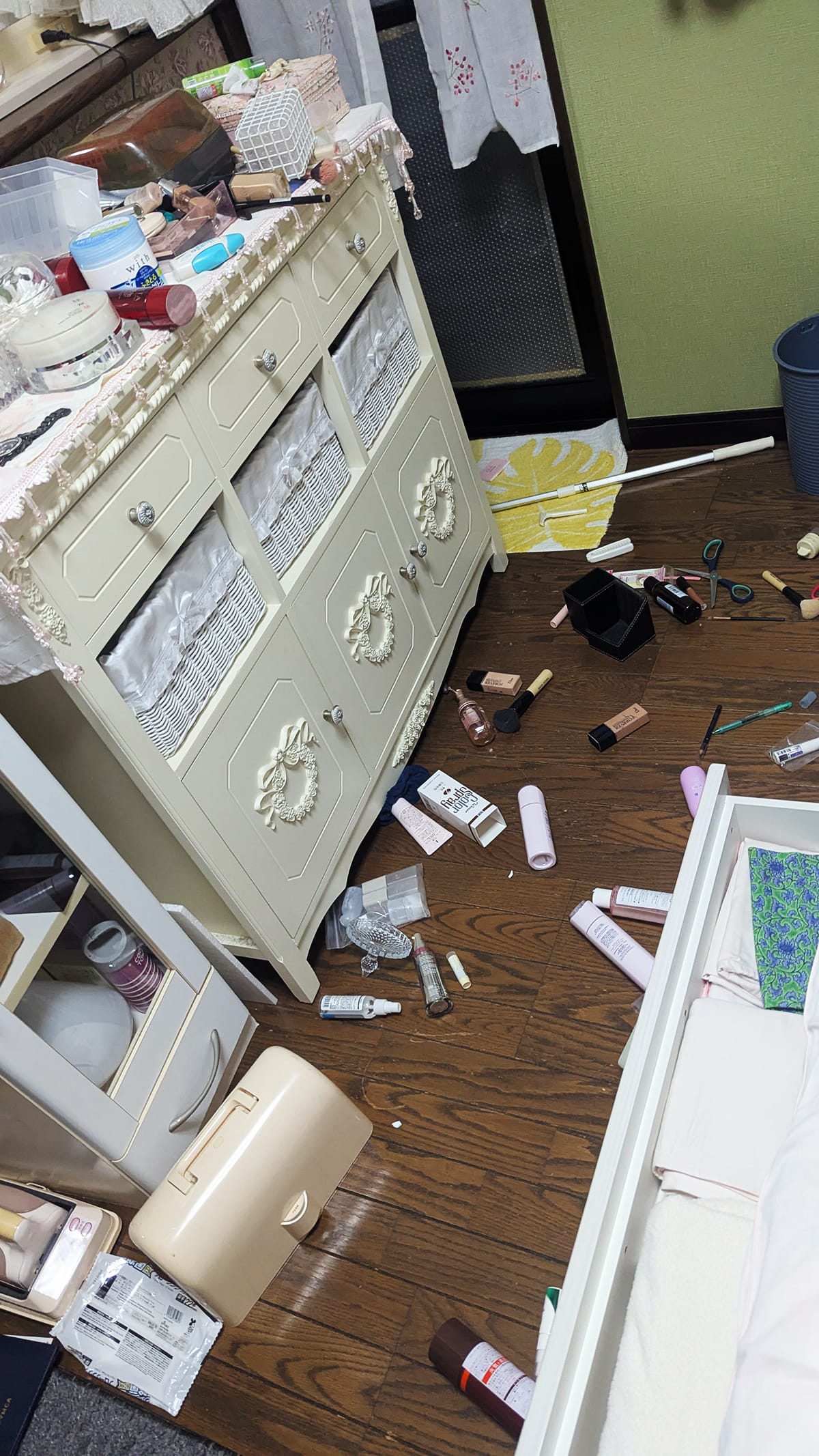
Items fell from cabinets inside Adele Matsuda’s home in Kumamoto City during the July 28 earthquake. (Photo supplied)
After the 2016 earthquake, she installed safety braces between the ceiling and tall cabinets in her home to prevent furniture from falling.
The braces helped protect her family during the latest earthquake, although some household items, including plates and flower pots, were damaged.
With aftershocks continuing, Matsuda said she has been sleeping in her car rather than inside her home.
“I feel safer in the car,” she said.
A decade after surviving the 2016 Kumamoto earthquakes, Matsuda said the biggest lesson she learned is to remain calm and prepared.
“We don’t know when an earthquake will come,” she said. “You have to stay calm and make sure there is nothing around you that could fall.”